
Boutique Hotel Teatro
A story that spans time
Rua da Esperança · Angra do Heroísmo
Some houses welcome guests. And some houses hold stories. This is the story of the house that, today, brings the Boutique Hotel Teatro to life.
“Amidst stone, wood, photographs and objects that have withstood the test of time, the Boutique Hotel Teatro invites you to discover a story that continues to be written.”
01 · THE HOUSE
Centuries of history in one house
According to historical information associated with the building, the house that today hosts the Boutique Hotel Teatro dates back to the 12th century. Since then, it has gone through centuries of changes, different eras and functions, preserving within its walls the marks of those who passed through here.
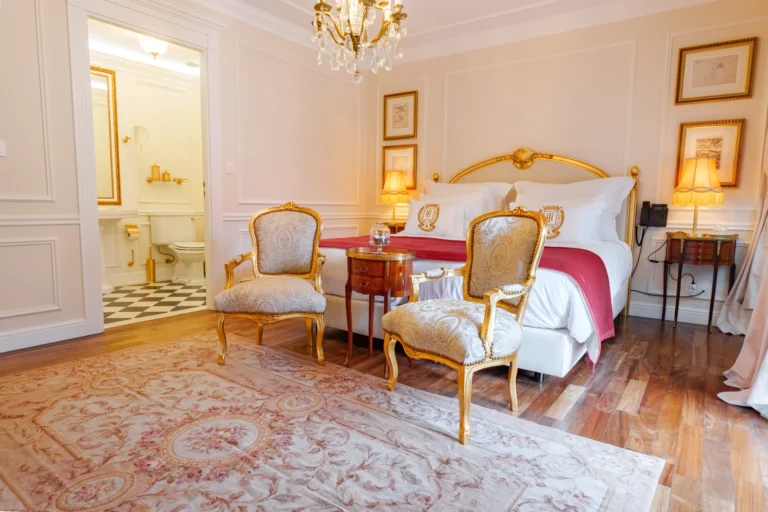
In 2024, the house gained a new life as Boutique Hotel Teatro, in a project that sought to establish a dialogue between past and present, preserving architectural features and original elements.
The historical presentation of the hotel refers to the preservation of original architectural elements and the transformation of the building in 2024.
02 · A HISTORICAL POSSIBILITY
António Sieuve de Séguier
There is a historical possibility, preserved in the hotel’s memory, that this was the house of António Sieuve de Séguier, identified as the first French Consul in the Azores.
In a period when Angra played an important role in Atlantic routes, the house would have been part of a context of circulation of people, goods, ideas and cultures.
Today, we do not know with absolute certainty everything these walls witnessed. The possibility that António Sieuve de Séguier lived here adds a new layer to the history of this house.
The memory preserved by the hotel associates the building with António Sieuve de Séguier and identifies him as the first French Consul in the Azores.
03 · ISLAND MEMORY
Memorial of the Ilhéus das Cabras
There are places that belong to the landscape and, at the same time, to the deepest memory of an island. Off the southeast coast of Angra do Heroísmo stand two imposing blocks of volcanic rock commonly known as Ilhéus das Cabras — although documentary memory preserves their presumptive and true name: Os Ilhéus do Coronel Canto.
Shaped by waves and time, these islets were for many decades an exclusive natural pasture for flocks of sheep. It is precisely in this landscape that the roots of our house intertwine: the ancestors of the hotel’s founding family were sheep farmers and breeders, dedicated to the art and extraction of wool.
At Boutique Hotel Teatro, we keep this testimony alive. We preserve in the space invaluable historical instruments that belonged to this daily work, including the original wool weighing scale and the manual iron shears used for shearing.
The Thread between Islands and the Ancestral Quilt
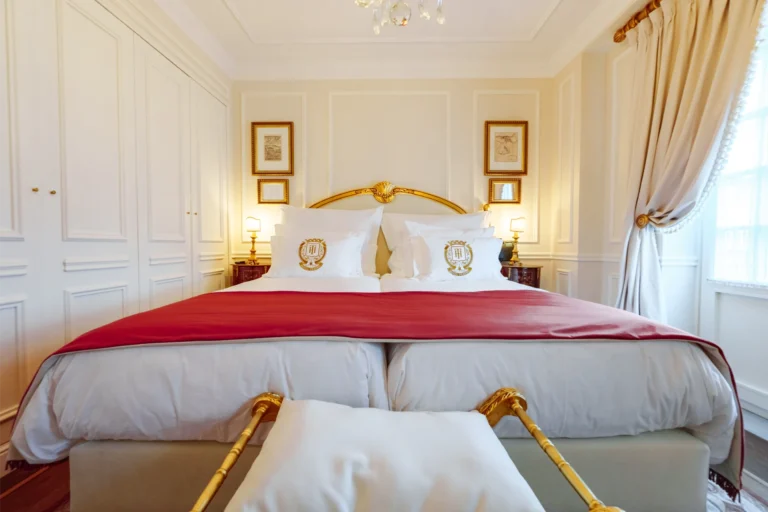
The ultimate expression of this memory is our traditional quilt: an ancient family treasure that reflects the umbilical connection between two Azorean islands. Pure wool shorn and spun in Terceira travelled across the channel to São Jorge, where master weavers patiently worked it on hand looms.
In São Jorge, the wool was dyed exclusively using techniques and vegetable pigments from the local flora. The pink and purplish tone still admired today results from the orchil (Roccella tinctoria), a lichen harvested from the rocky cliffs by the sea. A relic that holds in each thread the labour and soul of our ancestors.
04 · THE OVEN ROOM
Recipes from other times
Some memories are not only kept in the walls. They are also kept in gestures, aromas and the warmth of an oven.
In the Azores, the tradition of baking bread in communal wood-fired ovens has been documented since the mid-19th century. In Terceira, this relationship between fire, clay and time remains alive in our gastronomy: the traditional alcatra is slowly cooked in a clay pot in the heat of the wood fire.
The ovens of this house tell a story that goes far beyond the kitchen: they speak of a time when cooking meant preparing the fire, understanding the heat and letting time take its course.
“Stone, clay, wood and time: simple materials that for generations provided warmth and food to Azorean homes.”
05 · A UNIQUE DETAIL
The “praying hands” fireplace
Between the stone and the architecture, there are details that beg to be discovered: the fireplace in the shape of “praying hands”.
It is located in the Oven Room and has become part of the identity of this space. An unusual architectural solution, which might go unnoticed at first glance, but gains another meaning when you know the history of the house.
As you walk through the hotel, it is worth stopping, observing and looking a second time. Because here, details are not just details: they are fragments of a story that time has left behind.
06 · VISUAL MEMORY
Historical and exclusive photographs
At Boutique Hotel Teatro, photographs are not on the walls just to be seen. They are there to tell a story. They are fragments of other eras, faces, places and moments that help reveal the history of this house.
“Each photograph is a small window into another time.”
07 · HISTORICAL REMAINS
The Royal Pipes
Not all history is visible. Among the remains preserved by the house are two royal pipes, elements linked to ancient water conduction and drainage infrastructures.
The term “Cano Real” (Royal Pipe) itself belongs to an ancient tradition of hydraulic infrastructures. In Terceira, there are historical references to piping systems and a “Cano Real” associated with works carried out in the early 17th century.
Today, these two pipes are small testimonies of a history that is not always on the surface. Discreet but revealing traces of how spaces were built, used and lived in other eras.
At Boutique Hotel Teatro, history is also where you least expect it: among stones, walls and structures that time has not erased.
MATERIAL & ARCHITECTURE
Wood with soul
At Boutique Hotel Teatro, wood is more than an architectural element. It is presence, texture and memory — a thread that connects nature to the house, tradition to contemporaneity and the past to the way the space is lived today.
Different woods were chosen for their resistance, beauty and relationship with the region’s identity. In the floors, furniture, coverings and details, each application seeks to respect the architecture and give it a new expression.
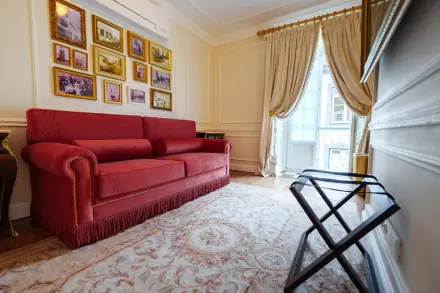
Wood from other houses
Some of the wood that is now part of the hotel already had a history before it arrived here. It was repurposed from old beams of houses rebuilt by Tasca das Tias, in the historic centre of Angra. Where they once supported roofs and structures, today they support memories.
Reusing is also preserving material, marks, textures and the connection to Angra’s traditional architecture. In this house, some woods continue precisely to tell that story.
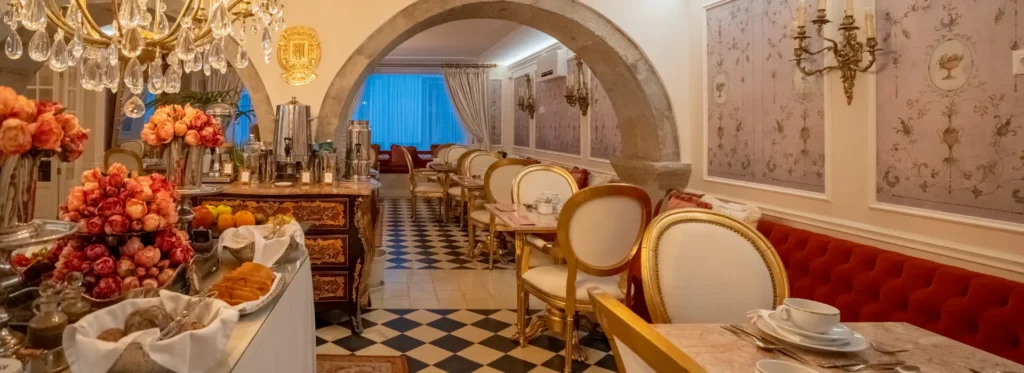
From the wood, the home
Acacia, Metrosideros, rosewood, heather, and Vinhatico are presented in the project as woods linked to the identity of Terceira. They bring different textures, tones, and characteristics, bringing the hotel closer to the land where it was born.
Each wood has its own personality. Together, they help create contemporary spaces in form, but connected to the land from which they come.
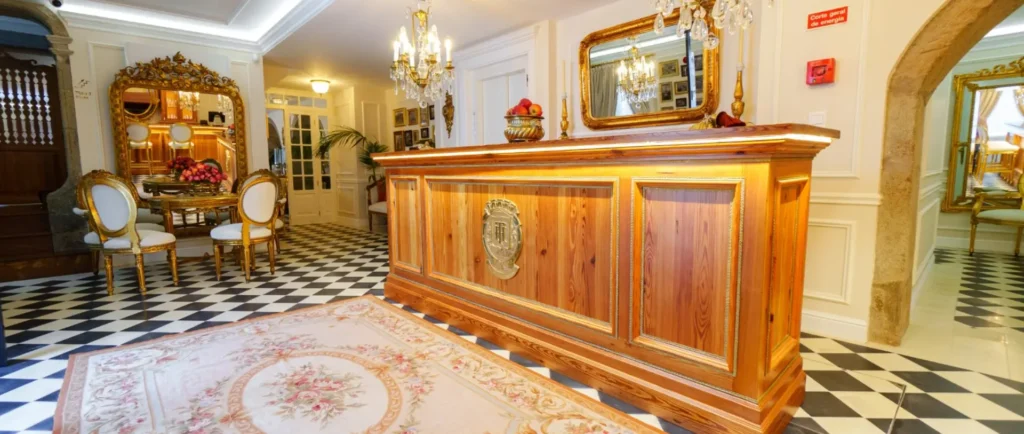
Each wood, its place
Sucupira was chosen for the stairs due to its density and resistance. In the furniture, Resinous Pine adds texture and character, while different variations of Beech contribute to brighter, more stable, and welcoming environments.
These are choices that go beyond function: resistance, texture, tone, and feel to the touch make the material an essential part of the experience.
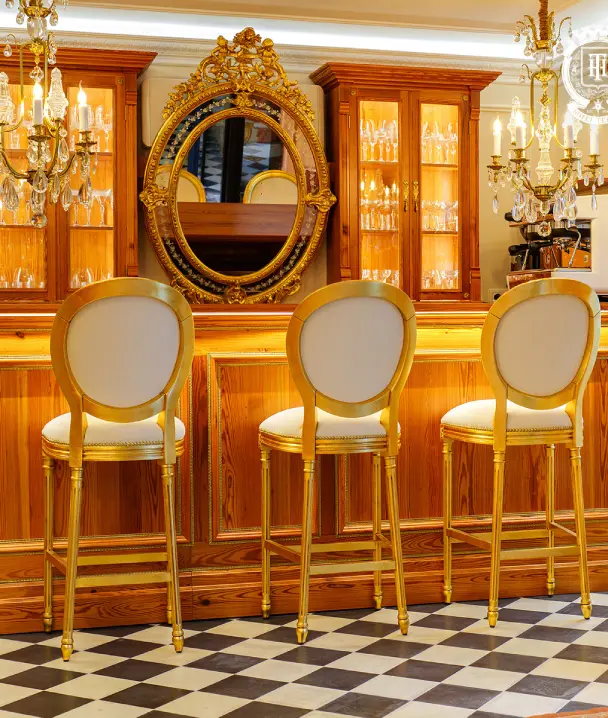
To preserve is to continue
Preserving is also a way of continuing. Reusing materials and integrating elements that already belonged to the history of the place prolongs the life of what existed, giving it new context and function.
Some woods were repurposed. Architectural elements were preserved. Other materials were chosen for their relationship with the island and the identity of the house.
These are concrete choices that tell a bigger story: building the present does not mean erasing the past. Here, sustainability and memory meet in the gesture of recognising the value of what exists and finding new ways to make it endure.
Because preserving is not leaving everything as it was. It is allowing what matters to continue to be part of the future.
Boutique Hotel Teatro
Thank you for being part of our story.
Now that you know a little more about this house, perhaps you will look at its details in a different way.
Rua da Esperança, 26 · Angra do Heroísmo · Azores